
How Does a Standard Unit Work?
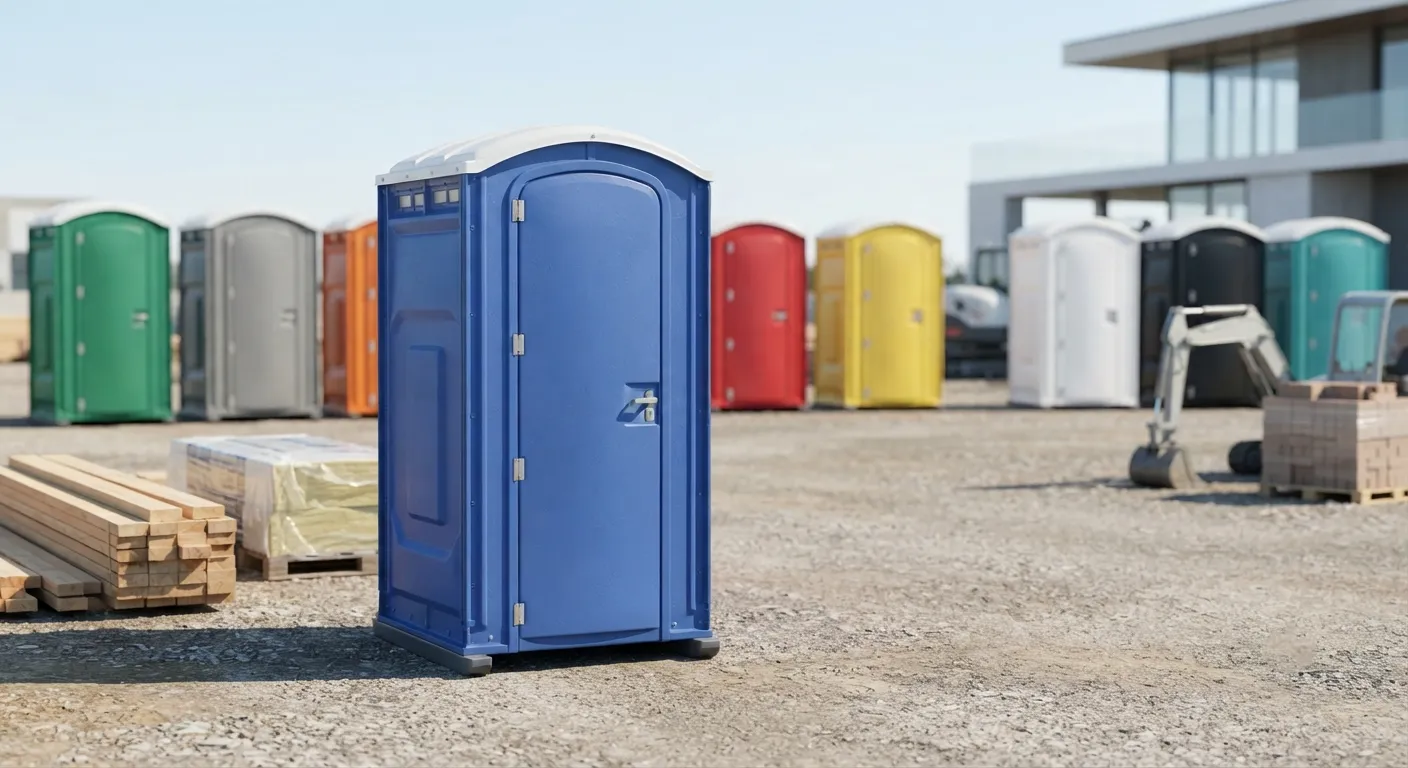
There is no mystery to it. A standard unit sits about 44 by 48 inches on the ground and stands roughly 92 inches tall, with a holding tank underneath the seat that stores waste until a service truck pumps it out. A blue deodorizing chemical in the tank breaks down solids and knocks back odor between visits. There is no water line and no electric hookup, which is why you see them dropped at job sites, backyards and curb lines all over Elizabeth with almost no setup. If you are trying to figure out how many you need for a crew, start with OSHA portable toilet requirements, which sets the ratio at 1 toilet per 20 workers under OSHA 1926.51(c). Curious what a rental actually runs? Check porta potty rental cost in Elizabeth or the per day pricing breakdown before you book.
How Do Flushable Porta Potties Work?
A deluxe flushable unit uses a small fresh-water tank and a hand-pump or foot-pump flush to rinse the bowl into a separate holding tank, so it feels closer to a real bathroom without a sewer connection. Some models add a sink with its own fresh-water reservoir. These units cost more than a standard rental, which makes sense once you see the tank-in-tank setup running. Anyone planning a wedding, backyard event or long jobsite stay in Elizabeth usually asks about the deluxe flushable porta potty once they've used a standard unit for a season. For sites needing accessible fixtures, the ADA accessible porta potty follows ADA Standards section 404.2.3, which sets a 32 inch minimum clear door opening, and ADA Standards section 304.3.1 requires a 60 inch turning circle inside.

How Does a Portable Sink Work?
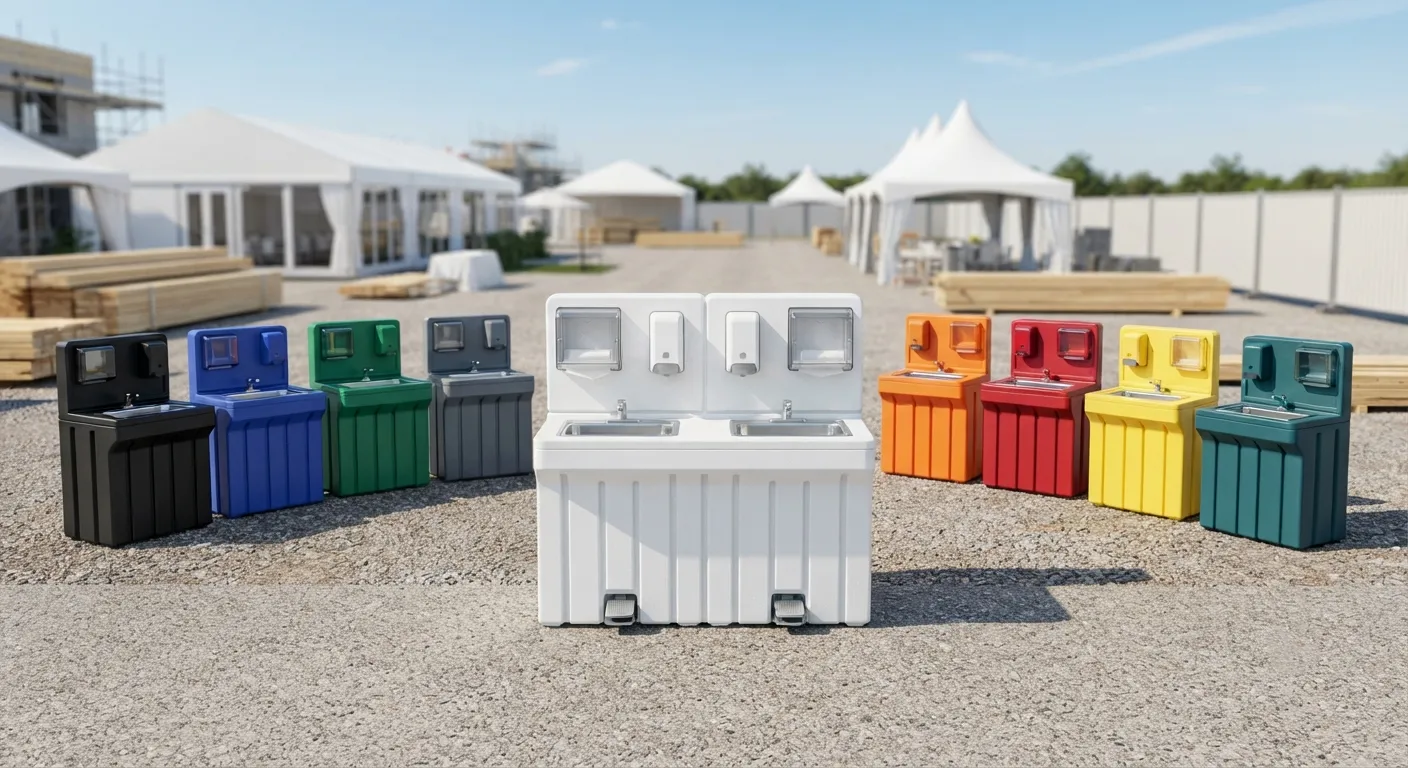
A portable sink or handwashing station runs on the same no-plumbing logic as a porta potty. A fresh-water tank feeds the faucet, usually by foot pump or gravity, and a gray-water tank underneath catches the runoff. Soap gets refilled by hand. 29 CFR 1910.141(d)(2) requires soap and towels or a hand-drying device at washing facilities, and hand sanitizer alone does not satisfy that rule. Construction crews doing paint, coatings, herbicide or insecticide work trigger OSHA 1926.51(f)(1) specifically, which is a narrower rule than general jobsite sanitation. A construction worker running to a porta potty on break still needs a place to wash up after, which is why most Elizabeth job sites pair a portable sink rental or handwashing station rental with the toilet order rather than relying on a hand sanitizer station rental alone.
How Do Camping Porta Potties Work?
Camping units work the same way as jobsite ones, just smaller and easier to move, and they still need pumping once the tank fills. If you're stocking a weekend site, a standard unit rents for a weekend rate that lands under the day rate multiplied out, so ask about weekend pricing directly rather than assuming it. For agricultural sites and farm labor camps, OSHA 1928.110 requires field sanitation within a quarter mile walk of hand-labor workers, at one facility per 20 employees, which matters for anyone running a farm and agricultural restrooms setup near Elizabeth. Placement matters more than people expect. A firm, level surface keeps a unit from tipping, and ADA Standards section 302.1 calls for stable, slip-resistant ground at accessible units. See the porta potty placement guide before you pick a spot, and check porta potty in winter if you're renting past November, since cold weather changes how the chemical performs.
Septic systems work on a different cycle entirely. A residential tank typically needs pumping every 3 to 5 years depending on tank size and household size, while a grease interceptor gets pumped once fats, oils, grease and solids hit 25 percent of the liquid depth. If you're searching for septic tank cleaning chemicals or wondering whether additives replace pumping, they don't. Chemicals treat odor and break down some solids between service calls, but they are not a substitute for septic pumping service. Homes closer to Hillside, about 3.9 miles northwest of Elizabeth, or Linden, 4.5 miles southwest, use the same pumping interval since it is driven by tank and household size, not location. Check septic tank warning signs if you're not sure your system needs a call yet, or how often to pump a septic tank for the fuller answer.
How often do porta potties get serviced?
The baseline is one visit per week for up to 10 users over a 40 hour week, per ANSI/PSAI Z4.3. High-traffic events or larger crews need more frequent pumping. See how often are porta potties cleaned for how that scales with headcount.
Do porta potties smell?
They can, mostly from heat, low service frequency, or an overfilled tank. The chemical deodorizer handles normal use, but a unit past its pump date will smell no matter what. Full detail is on do porta potties smell.
What chemicals go in a porta potty?
A blue deodorizing fluid, usually a formaldehyde-free formula, breaks down waste and masks odor in the holding tank. It is not a cleaning product for the exterior. Service techs add it during each pump-out, not something renters manage themselves.
Can I rent a porta potty for a single weekend?
Yes. Weekend rentals are common for backyard parties, block events and small gatherings in Elizabeth, and they're billed as a flat weekend rate rather than a daily one. Ask about weekend pricing specifically when you request a quote.
How many porta potties do I need for a job site?
It depends on crew size and duration. OSHA 1926.51(c) sets the minimum ratio, but longer projects or multiple shifts often need more. Use the how many porta potties do I need guide or call for a site-specific count.
Next step
Get a delivery date
Tell us the address, the dates and the headcount. We size the order and confirm the route.