
How Many Porta Potties Do I Need for a Construction Site?
OSHA 1926.51(c) sets the baseline: 1 toilet facility for 20 workers or fewer, then 1 toilet seat and 1 urinal per 40 workers once you pass 20, and 1 seat plus 1 urinal per 50 workers at 200 or more. A 15 person framing crew in Elizabeth needs one standard porta potty rental. A 65 person crew crosses the 40 worker bracket and needs two toilet seats plus urinals. Big commercial jobs near the port corridor often run 150 to 200 workers, which lands right at the edge of the third bracket, so check headcount weekly. Pair the count with OSHA portable toilet requirements before you finalize an order, and if the crew works with paints, coatings, herbicides or insecticides, OSHA 1926.51(f)(1) also requires washing facilities on top of the toilets, which a handwashing station rental covers. Most contractors in Elizabeth order through construction site services so toilets, fencing and a dumpster arrive on one delivery.
How Many Porta Potties Do I Need for an Event?
Events scale by guest count and hours, not by worker brackets. A rough industry guide is 1 unit per 50 guests for a 4 hour event without alcohol; add units as hours or drinking increase. A 200 guest backyard wedding in Elizabeth needs roughly four standard units, or two standard units plus one ADA accessible porta potty to meet ADA Standards 213.2, which requires at least 5 percent of a cluster to be accessible with a minimum of one unit. Multi-day festivals need service scheduled between days, not just at teardown. Check the event restroom rental page for a longer breakdown, and see wedding restroom rental or festival restroom rental for format-specific counts.
| guests | hours | units (no alcohol) | units (with alcohol) |
|---|---|---|---|
| 50 | 4 | 1 | 2 |
| 100 | 4 | 2 | 3 |
| 200 | 4 | 4 | 5 |
| 300 | 6 | 5 | 7 |
Does Serving Alcohol Change the Count?
Yes. Alcohol increases bathroom trips and shortens the interval between visits, so add roughly one extra unit for every 100 guests once drinks are served. A 150 guest block party in Elizabeth that serves beer should plan for three units instead of two. Multi-day events compound this: a two-day county fair setup needs service mid-run, not just a single drop and pickup, because tanks fill faster with sustained alcohol service. Concerts and golf tournament restrooms with bar service typically add a deluxe flushable porta potty or two near the beverage tent rather than spreading extra standard units across the whole footprint. If the event runs past dark, pair added units with a light tower rental so the path stays lit and safe.
What Does OSHA 1926.51(c) Actually Require?
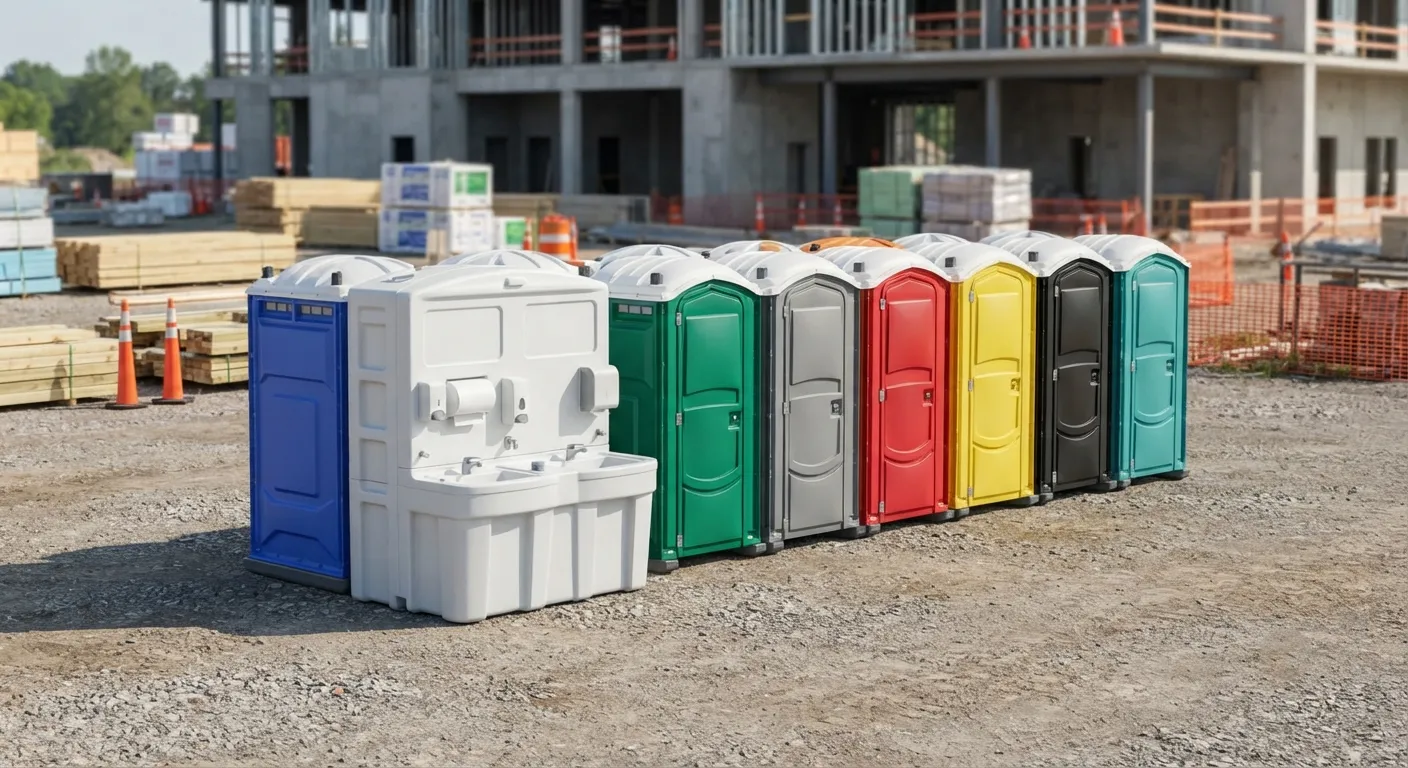
The rule sets three brackets: 1 toilet for 20 workers or fewer, 1 toilet seat and 1 urinal per 40 workers from 20 up, and 1 seat plus urinal per 50 workers at 200 or more workers. This is a construction-specific standard; general industry workplaces fall under 1910.141(c)(1)(i) instead, which uses a different ratio table. OSHA 1926.51(a)(1) also requires an adequate supply of potable water at every jobsite, separate from toilet counts. A renovation crew of 8 working a single-family home in Elizabeth only needs one unit, which makes home renovation porta potty service the simplest order on the list. Larger crews should read the full OSHA portable toilet requirements page before submitting a bid, since underestimating the bracket is an easy way to fail an inspection.
How Do Dumpster Sizes Affect the Sanitation Plan?
Sanitation and debris removal get planned together on most jobsites, so it helps to know the numbers side by side. A 10 yard dumpster runs about 14 feet long, and a 20 yard dumpster runs about 22 feet long on a standard chassis. In cubic feet, a 10 yarder holds around 270 cubic feet and a 20 yarder holds around 540 cubic feet. Weight capacity follows a similar climb: a 20 yard dumpster typically carries 3 tons, a 30 yard dumpster carries roughly 4 to 5 tons and holds about 810 cubic feet, and a 40 yard dumpster carries around 5 to 6 tons across roughly 1,080 cubic feet. Match the dumpster size to the same crew count driving your toilet order. See dumpster sizes and dimensions for full specs, or jump straight to 30 yard dumpster rental or 40 yard dumpster rental if the job is a full teardown. A roll-off delivery needs about 60 feet of straight clearance behind the truck, which matters on tight Elizabeth lots near older housing stock.
Where Should Units Go on Site?
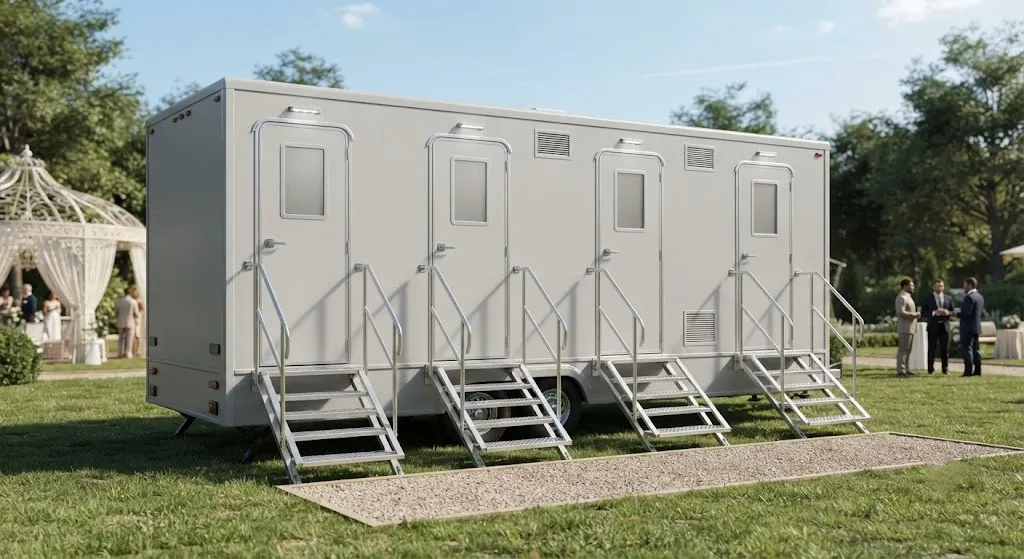
Placement drives usability more than raw count. ADA Standards 403.5.1 requires a 36 inch clear accessible route to any unit serving as the accessible station, and 405.2 caps ramp slope at 1:12 if the ground isn't level. Keep units on a stable, slip-resistant surface per ADA 302.1, and leave a 60 inch turning circle in front of accessible units under ADA 304.3.1. In Elizabeth, tight urban lots near downtown often force units toward the street side, so confirming placement in the public right of way with the city is worth doing before delivery, since curb rules vary by block. Full guidance lives on the porta potty placement guide, and permit questions belong on porta potty permit requirements or dumpster permit requirements if a roll-off shares the same footprint.
Should I Order Extra for a Longer Rental?
Yes, and the math is straightforward: ANSI/PSAI Z4.3 sets the baseline service interval at once per week for up to 10 users across a 40 hour week, so a longer job or higher headcount needs either more units or more frequent service, not neither. A 6 week commercial build in Elizabeth with 30 workers should plan service twice weekly rather than stretching the standard interval. Compare daily, weekly and monthly options on porta potty rental per day and monthly porta potty rental before locking in a term, and check porta potty rental cost for the full pricing picture across unit types.
| duration | standard unit | ada unit |
|---|---|---|
| day | $100 to $350 | $200 to $400 |
| week | $130 to $500 | $120 to $240 |
| month | $125 to $325 | not typically monthly |
Crews near Hillside, about 3.9 miles northwest of Elizabeth, and Linden, about 4.5 miles southwest, often size orders the same way once headcount and duration are set. Ready to lock a count? Request a quote and Elizabeth Porta Pros will confirm the bracket before delivery.
How many porta potties do I need for 100 people?
Plan on two standard units for a 4 hour event without alcohol, or three if drinks are served. Add one ADA accessible porta potty to meet the 5 percent minimum under ADA Standards 213.2. Multi-day events need a mid-run service call, not just delivery and pickup.
How many tons does a 30 yard dumpster hold?
A 30 yard dumpster typically holds roughly 4 to 5 tons, with about 810 cubic feet of capacity. Actual weight limits depend on material density, so a load of concrete fills the weight limit long before it fills the box. Check dumpster weight limits before loading heavy debris.
How many cubic feet are in a 20 yard dumpster?
A 20 yard dumpster holds about 540 cubic feet, running roughly 22 feet long on a standard trailer. It typically carries about 3 tons of debris. See 20 yard dumpster rental for delivery specifics in Elizabeth.
Do I need more toilets if the crew works with chemicals?
Yes. OSHA 1926.51(f)(1) requires washing facilities specifically when workers apply paints, coatings, herbicides or insecticides, separate from the toilet count under 1926.51(c). Add a portable sink rental or handwashing station rental alongside the toilets for that crew.
What is the difference between construction and general industry toilet rules?
Construction sites follow OSHA 1926.51(c), which brackets by worker count in steps of 20, 40 and 200. General industry workplaces use 1910.141(c)(1)(i) instead, a different ratio table entirely. Confirm which standard applies before ordering for a mixed-use site.
How many feet is a 10 yard dumpster?
A 10 yard dumpster runs about 14 feet long and holds roughly 270 cubic feet. It suits smaller cleanouts paired with a single standard porta potty rental on residential jobs. Compare it against larger boxes on dumpster sizes and dimensions.
Next step
Get a delivery date
Tell us the address, the dates and the headcount. We size the order and confirm the route.